


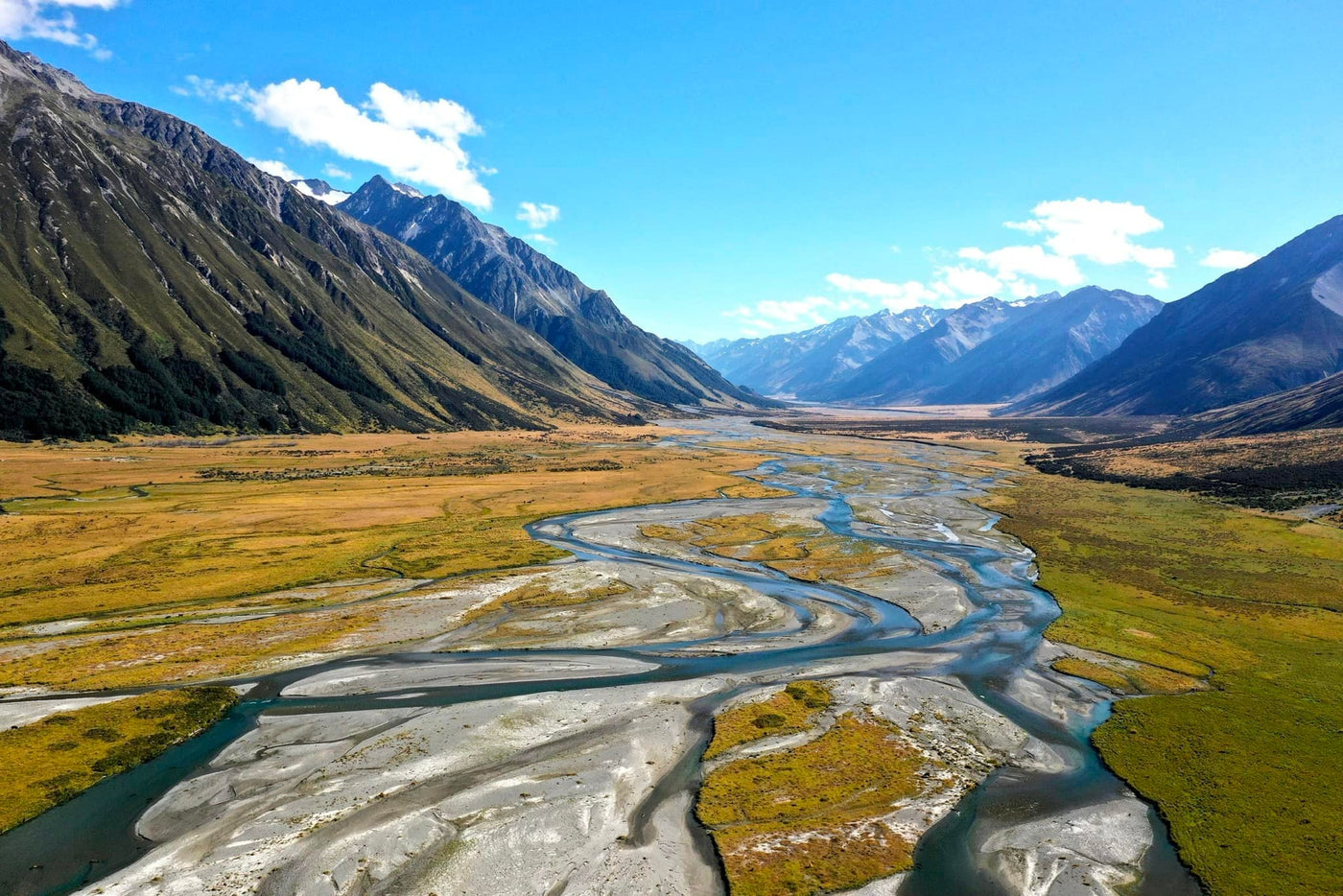
-

Return flight
We book your flight and all transfers
-

Tailored fishing trips
If our suggested dates don't work, we can tailor your experience to your wishes.
-

Accommodation
Lodges, boutique hotels or exclusive backcountry lodges
-

Fishing season
October - May
-

Species
Brown trout, Rainbow trout

USD 9,995 per person
Based on an 11-day trip with 6 full fishing days for 2, 4 or 6 people.
Do you want to fish more days, add sightseeing and stay longer? Contact us for a quote.
This is included in the price of the fishing trip
- Return flights from major European airports.
- Return transfers between the airport, accommodation and the various fishing spots.
- 6 full days of guided fishing (2 anglers per guide).
- All fishing equipment.
- Fishing licenses.
- All taxes and fees.
- 7 nights accommodation in a single room.
- Breakfast, lunch, 3-course dinner and non-alcoholic beverages every day.
This is extra
- Optional tips for guides and staff.
- Flights from the USA or other parts of the world. Contact us for exact pricing.
Optional extras
- Alcoholic beverages.
-

Day 1-2
Flights from your desired departure location.
-

day 3
Arrive in Queenstown. Our representatives will be waiting at the airport to take you to your accommodation. Spend the afternoon and evening enjoying the surroundings and having a good meal.
-
Day 4-9
Six full days of fishing. Experience everything from small streams to larger watercourses in pursuit of large trout and rainbow trout.
-

Day 10
After breakfast, you will be transferred back to Queenstown Airport for your onward flights home.
-
day 11
Landing back home in Europe.
-
Book by request
Depending on the length of the fishing trip, when you want to travel and how many you are.
Contact us with your preferences and we will put together your package!
-
Fixed departures
January 14 - January 23, 2027
Fully bookedJanuary 22 - February 1, 2027
Places available
November 18-28, 2027
Places available
January 29 - February 5, 2028
Places available


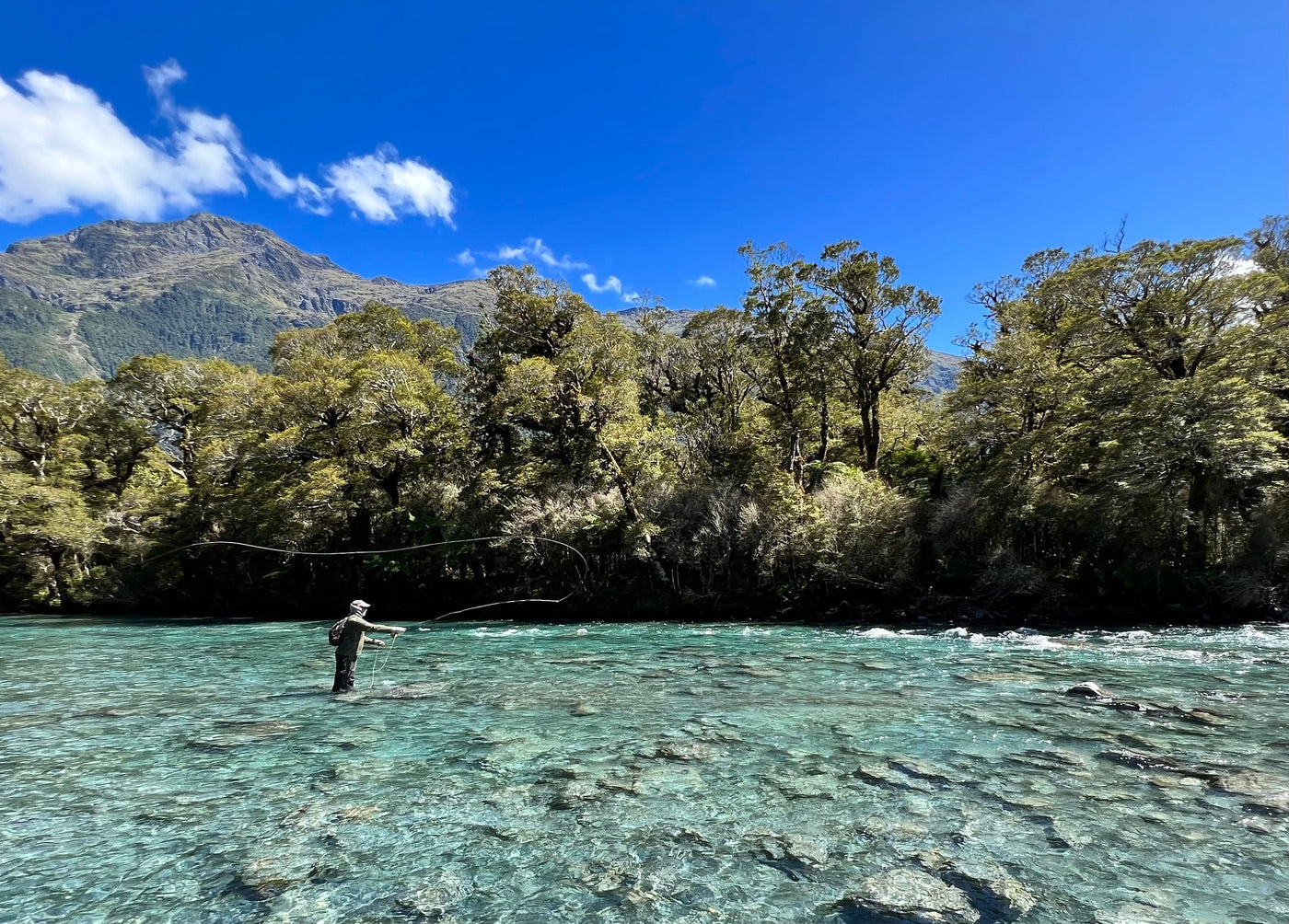



fish species and bait choice
Fishing in New Zealand primarily targets wild brown trout and rainbow trout. Brown trout are the dominant species, known for their size, wariness, and selective feeding behavior, while rainbow trout are found in some rivers and lakes and are often very strong fish.
The fishing largely relies on sight fishing, where presentation and precision are crucial. Dry fly fishing is the most common method, with imitations of mayflies, caddisflies, and stoneflies. During summer, terrestrials like cicadas and grasshoppers are very important. Nymph fishing is used as a complement and fished with simple, natural patterns, often in combination with a dry fly. Streamers can be effective in deeper pools and during higher water flows.
Most waters are best fished with 8.5–9 foot rods in class 5 or 6 and floating WF lines. A class 7 rod can be useful in windy conditions or in larger rivers. Long leaders of 12–16 feet are standard, where discreet presentations are more important than long casts. A floating line is sufficient for almost all fishing.
Fly fishing in New Zealand is about a calm approach, accuracy, and the right fly at the right time. When everything aligns, encounters with large, wild fish await in some of the world's most spectacular fly fishing environments.
Loading...
Regular price
€1.146,95
Unit price
Scott Fly Rod Co. Scott Centric - 10'0" #4 4-piece is backordered and will ship as soon as it is back in stock.
Equipment we recommend for your fishing trip
View allWe'll help you
These are just some of the fishing essentials we recommend for your fishing trip. At Outside Travels, we're with you every step of the way – before, during, and after your trip. Get help with everything from packing lists and equipment to valuable fishing tips that will make your experience even better.
-

Scientific Anglers Amplitude Smooth VPT 2.0
Regular price €128,95Unit price -
Regular price €174,95Unit price
-
-
 Regular price €375,95Unit price
 -
Simms BugStopper SolarFlex Hoody
Regular price €114,95Unit price -

Do you want to know more or book?
Talk to Oskar
he will be happy to help you.
+46 313 758 200
info@outsidetravels.com
Artiklar & guider för fiske på Nya Zeeland
Before a fishing trip to New Zealand
What fish species are found in New Zealand?
What fish species are found in New Zealand?
Fly fishing in New Zealand primarily targets wild brown trout and rainbow trout, two species that thrive in the country's clear and nutrient-rich waters.
Brown trout are the most common species and are known for their size, wariness, and selective feeding behavior. Rainbow trout are found in certain rivers and lakes and are often extremely strong fish with fast runs.
The fishing focuses on natural behavior, sight fishing, and technical fly fishing in rivers, streams, spring creeks, and lakes, making New Zealand one of the world's most highly regarded destinations for trout fishing.
When should one go on a fishing trip to New Zealand?
When should one go on a fishing trip to New Zealand?
The best time for fly fishing in New Zealand is October to April, covering the country's spring, summer and early autumn.
October - December (spring fishing)
The season opens in October when the rivers swell with snowmelt. The trout are hungry after winter and feed aggressively. This is the time for nymph and streamer fishing in rivers with somewhat higher water levels. Many of the large backcountry waters become accessible, and the chances of catching trophy trout are very good.
January - March (peak season)
Summer is the most popular period for fly fishing on the South Island. The water is clear, insect hatches are intense and the weather is stable. This is a dry-fly angler's paradise, with sight fishing in crystal-clear streams. Cicadas and large caddisflies dominate the menu, and the fish can become selective - perfect for those who love technically challenging fishing.
April - May (autumn fishing)
As the nights grow colder, the trout become more active in preparation for winter. The fish begin feeding intensely to build up their reserves. This is also a beautiful time on the island, when the landscape is transformed by the gold and red hues of autumn. Nymph and streamer fishing once again become highly effective.
Can I customize my fishing trip
Can I customize my fishing trip
Yes, absolutely. Our fishing trips to New Zealand are completely tailor-made. We adapt the itinerary to your wishes regarding trip length, number of fishing days, areas on the South Island, accommodation type, and fishing difficulty.
The trip can be designed with a focus on, for example, backcountry fishing, sight fishing in classic spring creeks, helicopter fishing to remote waters, or a combination of several regions. We also adjust the pace so that the trip suits both experienced fly fishers and those who want to develop at a more relaxed pace.
Contact us and we will create a personalized itinerary based on the season, current water conditions, and your goals for the fishing trip.
Passport and visa information – New Zealand
Passport and visa information – New Zealand
For Swedish citizens, a valid passport is required for entry into New Zealand. The passport must be valid for the entire duration of your stay, and it is recommended to have at least six months of validity remaining upon entry.
You do not need to apply for a traditional visa for tourist trips of up to 90 days, but you must apply for an NZeTA (New Zealand Electronic Travel Authority) before departure. The application is made digitally online and is usually approved quickly.
In connection with the NZeTA, a mandatory tourist levy (IVL) is also paid, which goes towards conservation and infrastructure.
We recommend applying for an NZeTA well in advance of your departure. If you have any questions regarding entry, documents, or regulations, we are happy to help you prepare for your fishing trip to New Zealand.
Facts about the country
Facts about the country
New Zealand is an island country in the southwestern Pacific Ocean and consists of the North Island and the South Island. The country is known for its spectacular scenery, with mountains, glaciers, clear rivers, lakes and coastlines, making it one of the world’s most attractive destinations for fly fishing and adventure travel.
For sport fishermen, New Zealand is particularly unique thanks to its wild populations of brown trout and rainbow trout, crystal-clear waters and strong focus on sustainable fishing. Many waters are fished on a catch-and-release basis, and fishing pressure is low across large parts of the country.
The climate is temperate with distinct seasons, providing long fishing seasons. The infrastructure is well developed, the country is safe to travel in, and the local people, known as Kiwis, are known for their hospitality and interest in outdoor activities.
New Zealand combines world-class fly fishing with a high quality of life, excellent food, really good wine and a strong nature and adventure culture. This makes the country an obvious choice for anyone who wants to experience sport fishing at a high level in a unique setting.
Is there Wi-Fi available?
Is there Wi-Fi available?
Yes, Wi-Fi is available during the fishing trip in New Zealand. Most of the accommodations used have access to wireless internet.
How do you fish in New Zealand?
How do you fish in New Zealand?
Fly fishing in New Zealand largely revolves around sight fishing, where you actively search for fish in clear water and present your fly with high precision. The fishing primarily targets wild brown trout and rainbow trout in rivers, streams, spring creeks, and occasionally lakes.
Dry fly fishing is the most common and classic method, often using imitations of mayflies, caddisflies, and terrestrials such as cicadas and grasshoppers during the summer. Nymph fishing is used as a supplement, sometimes in combination with a dry fly, and requires long leaders and discreet presentation. Streamers are used more selectively, primarily in deeper pools or when water levels are higher.
The fishing demands stealthy approaches, natural presentations, and a calm pace. Short, precise casts are often more important than long ones. Guided fly fishing is very common and provides access to the right waters, local knowledge, and technical tips that increase your chances of landing trophy fish in New Zealand's unique environments.
What's the weather and climate like?
What's the weather and climate like?
New Zealand has a temperate climate that varies significantly between seasons and regions. On the South Island, where most fly fishing takes place, the weather can change quickly, and it's common to experience several seasons in one day.
The fishing season primarily runs from October to April. Summer, from December to February, offers warmer temperatures, long days, and stable fishing, but also periods of wind. Spring and autumn are often favored times for fly fishers, with cooler temperatures, fewer tourists, and very active fish.
The weather is strongly influenced by the mountain ranges, meaning local variations are common. Rain can raise water levels quickly, but often provides good fishing once the rivers clear again. Flexibility in planning and appropriate clothing for sun, wind, and rain is essential for a successful fishing trip to New Zealand.
Travel Guarantees & Insurance
Travel Guarantees & Insurance
We at Outside Travels have arranged a travel guarantee with Kammarkollegiet (the Swedish Legal, Financial and Administrative Services Agency), which means you can travel with us securely.
The travel guarantee entitles you to compensation if any part of your package tour or linked travel arrangements cannot be completed due to the organiser's insolvency.
With our travel guarantee and well-planned fishing trips, you can lean back and focus on what's most important – your fishing adventure.
Terms and Conditions
Terms and Conditions
When you book a fishing trip with Outside Travels AB (org. no. 559046-2395), you travel safely and securely. We follow the general terms and conditions of the Swedish Association of Travel Agents and Tour Operators (SRF) as well as our own specific terms and conditions, adapted for fishing trips and package tours.
The terms describe everything you need to know about booking, payment, cancellation, changes, and liability. We also have a travel guarantee with Kammarkollegiet, which means you are protected if anything should happen to the organizer or the trip.
The purpose of our travel terms and conditions is to allow you to focus on what matters most – your fishing adventure – with complete security and clarity before departure.


